Showing posts with label Missinaibi River. Show all posts

Thursday, 1 January 2009

Preparation For The Voyage - Prologue

Preparation For The Voyage

“In nature there are neither rewards nor punishments - there are consequences”
R. G. Ingersoll

With an unfortunate turn of events in the spring of 2006 came the realization that my canoe trips would be forever in the past and that any future trips would be via a wheelchair. So much idle time bred boredom so I began to jot down various recollections and organize photos of some of my favourite river trips. My notes slowly evolved to become these short stories based on my true life adventures. As I initially wrote these stories solely for my own amusement, they were often written out of sequence, as my mood dictated. For example, I wrote about some humorous events which occurred on our way to canoe Ontario’s Missinaibi River, never expecting to write more about the actual trip itself. Inspiration struck some time later and I then wrote about events at the conclusion of the trip. Still later I added a story about events at Kettle Falls, early in the voyage. Having come this far I felt compelled to tie the loose ends together and complete the voyage. As a result, my 1980 trip down the Missinaibi River was written in the order of chapters1,4,3 & 2. Each chapter stands as a complete tale however anyone wishing to read about this trip in sequential order should search for the following stories or click on the links below:
Yuri
(1) Chapter One - Hornepayne Ontario On Route To the Missinaibi River (1980)
(2) Chapter Two - Missinaibi River: Mattice to Moosonee (1980)
(3) *Chapter Three - Kettle Falls: A Fleeting Glimpse of Spirituality - Missinaibi River (1980)
(4) Chapter Four - Missinaibi River - First Excursion - Moose River (1980)
*more accurately, a supplemental chapter of some personal views.


The stories presented here are simply my recollections & reflections of time I spent on my beloved Northern Ontario rivers. There are numerous detailed, mile by mile, rapid by rapid description of these river routes available on the web. My intent was never to duplicate these guides but rather to offer the reader a feel for the river's character, to share the situations I encountered along the journey and to convey the joy experienced in wilderness canoeing.

Note (1): Uploading or Publishing dates of these Posts are irrelevant as I have placed them in an order of my own preference. Newer posts are added to the end (oldest dates). I may mirror these posts at some future time in a web site which would be a more appropriate vehicle for presenting the material on this site.

Note (2): A number of the photos displayed here have been accepted by Google Earth and can be viewed by following the rivers on their site.

***Update August 2010: I thank all those who have viewed and commented on the photos I uploaded to Google Earth. An occasional commentator has taken issue with the exact placement or location depicted in some particular photo. Please remember that the river trips posted were made between the late 1970's and late 1980's, long before Google, and of most relevance, the Global Positioning Satellite/System (GPS).

I made an honest effort to map my photos accurately using written notes made at the time, notations scratched upon my topographical maps and the numerical continuity of my photographic slides - not to mention my faltering memory some thirty years hence. As such, I did not memorize, nor do I have the GPS coordinates of any particular rock, tree or bend in the river. I admire those who can view my photos of trips taken along a several hundred mile stretch of river, confidently identify particular features along route, and offer a correction. I thank you.

As stated in my preamble, the intent of this blog (and accompanying photos where ever they may appear) was never to have it used as an absolute guide or reference for those attempting these same trips, but rather as a vehicle to share my passion for canoeing, my love of these rivers and experiences encountered along the route. If not of an indisputable feature, the Photos I uploaded to Google Earth offer a visual reference of the general characteristics of the river as close to the exact location as I can place them.

Any errors in matching my photos on Google Earth to their exact and precise location are mine alone.


Note (3): I have provided Longitude & Latitude co-ordinates for the river locations at the end of each tale. By cutting and pasting the co-ordinates into the Google Earth Search bar as they appear, the search feature will bring the viewer to the rivers & locations mentioned.

July 1st, 2009
Note (4): The Flickr photosharing site who's services my internet provider is associated with, has significantly downsized the free hosting capacity to their clients. As I am unwilling to pay a premium price for the few number of photos (as slideshows) I present on this blog, I am experimenting with other providers and slideshow media. At the end of most tales there will either appear a slideshow or a link to a mirrored site on which the appropriate slideshow appears. Bear with me while I experiment in achieving the best presentation without supplementing the income of internet moguls & CEO's.

January, 2010

Note (5): I've always welcomed comments on the stories presented here however in recent weeks the spam-bots have found this blog site and have begun daily postings in the comments section - unrelated to any topic found on this site. For that reason I've had to initiate 'word verification' for those wishing to post a comment so as to reduce the self-serving garbage posted by spammers.

March 2010
Note (6): Though hosted by Blogger through Google, this site, for all it's faults and shortcomings, was my attempt at artistic expression, and perhaps self indulgence. Art, of course is in the mind of the creator and eye of the viewer - the two often may not connect. I however assembled this material foremost to please myself and if others found anything of interest amongst the words and photos - all the better.

I assembled the material in this blog in a manner of my choosing and for reasons of my own, wished to display a large number of posts per page. This month Google has decided otherwise and in an attempt to "improve" my site and others like it have introduced 'automatic pagination' where Google dictates how many posts per page and where the cuts occur.

Tales From The Paddle is heavily content laden and took some time to load but was presented as I wished. Google however knows better...

(I Now have a sidebar with content that runs on endlessly down the page)

© Copyright - All rights reserved.


“The river delights to lift us free, if only we dare to let go. Our true work is this voyage, this adventure”
Richard Bach

Friday, 28 November 2008

Hornepayne Ontario (Missinaibi River 1980)

Hornepayne Ontario On Route To the Missinaibi River (1980)
(Chapter One)

“It gave me a moment of exquisite satisfaction to find myself moving away from civilisation in this rude canvas canoe of a model that has served primitive races since men first went to sea.”

John Millington Synge

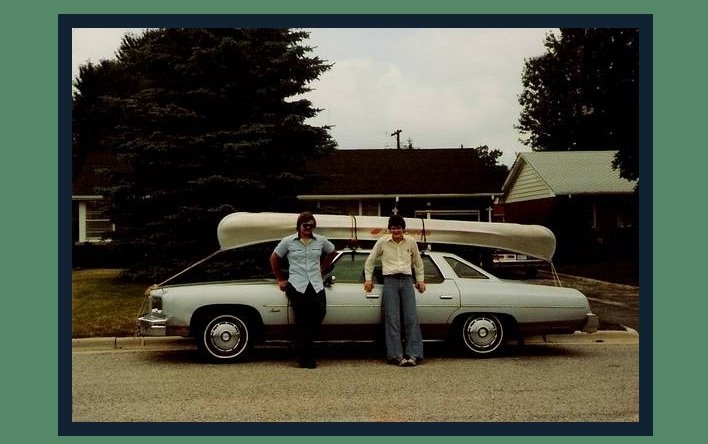
Brian and I, having finished loading the Chevy, gave one last tug on the ropes securing the canoe to the roof, said our goodbyes and departed our university town of London Ontario. Pushing back into my seat, I pulled out my treasured collection of Gordon Lightfoot cassettes and searched for an appropriate album with which to christen our journey.

Lightfoot’s music has always been my refuge, where I can hide between trips to the northern wonders of my beautiful province. Gord’s gift of painting musical portraits depicting rugged wilderness, lost loves and lonesome travels, have always been the embodiment of the Northern experience. What better way to start our trip than to complement it with some treasured Lightfoot tune? How appropriate! His beautiful tune ‘Hi’way Songs’!

Our destination would be the town of Mattice on the Trans-Canada Highway where we would test ourselves against the waters of the Missinaibi River. The beautiful Missinaibi is one of the last undammed rivers still free to run off the granite Canadian shield then weave it’s way through the Hudson Bay lowlands. Joining with the Mattagami River at Portage Island, the marriage of waters form the mighty Moose River.

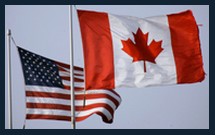
A flip of a coin had us set our compass westward, taking the American over the Canadian route to ultimately reach our jump-off point(1). As the skies turned an unfriendly grey, we cranked up the heat to drive away the dampness of this spring day.

Approaching Port Huron, we crossed over into the state of Michigan on Route 69 then set our compass for Highway 75 and our trek northwards.

As growls from our stomachs were beginning to challenge the stereo’s volume, we chose an upcoming off-ramp outside of Flint Michigan and searched for some enticing restaurant offering a meal and brew. A rather tired looking pub sporting a flickering neon ’Schlitz’ sign beckoned us in spite of it‘s questionable appearance.

It was a rather uneasy feeling walking into that smoky darkness, the slamming door committing us to our choice. Chatter quickly died off as all eyes turned towards our two silhouettes standing in the doorway. God, it was just like a scene from the movies, where Bubba and the boys sized up the strangers in town. Plaid shirts, sports caps and the odd toothless grin aimed at us could have been a scene right out of ‘Deliverance’! Swallowing hard, we could feel eyes following us across the room as we seated ourselves and waited to be served. The din of the “good ‘ol boys” slowly returned as they once again swore insults and slapped each other’s backs.

Having finished our burger and Bud, our chairs screeched our intention to leave and all attention once again descended upon us. The cashier eyed me with curiosity as I opened my wallet to settle our tab. Pulling out some American ‘greenbacks’, a bright blue coloured Canadian bill fell to the counter. George Washington had brought Sir Wilfred Laurier along for a trip and he lay there staring back at me. “You boys Canadian?” drawled the apron garbed proprietor. My God, strangers AND foreigners invading their local hangout! “Yes we are, just passing through” I sputtered, keeping one eye on the door, our only means of escape. “Well boys, there’s no charge”. “No Charge?” I asked in confused disbelief . “Nnnooo chaaaarrge” the owner reiterated slowly so we “Canucks” could understand.. Once again the commotion faded as eyes focused upon us.

Canadian? As if a priest had just performed an exorcism, the atmosphere in the room lifted. The cashier’s till slammed shut and ‘the boys’ shouted jovial greetings at us!

It was 1980 and the year before Canadian ambassador Ken Taylor, stationed in Iran, had offered sanctuary to six American citizens hiding from militants. The insurgents who had invaded the U.S. embassy had taken over seventy hostages. With the blessing of the Canadian government, these American’s were issued Canadian passports and smuggled out of Iran as our own citizens.

We were soon made to realize that as Canadians, our grateful American neighbours were eager to offer us a token ‘thank you’ for the actions of our government. We were touched by the gesture, yet rather embarrassed as we obviously had no direct involvement. Escorted to our cars as celebrities we headed back to the interstate beaming, yet humbled. After all, neighbours look out for each other.

The sky remained overcast with a light drizzle periodically reminding us that summer had yet to arrive. The trip through the heart of Michigan was spectacular. Our ribbon of blacktop ran through a lush green corridor with abundant wildlife periodically watching the traffic from the roadside. Again, Lightfoot was our companion as his newly released album ‘Dream Street Rose’(2) was receiving disproportionate airtime. His song ‘On The High Seas’ blared out the lyrics:

“ was it somewhere in Michigan, or the Lake Of The Woods”.


Crossing back into Canada over the Michilimackinac bridge we entered the city of Sault Ste. Marie. Following the Trans-Canada Highway, as it hugged the eastern coast of Lake Superior, we were treated to a spectacular sunset.


Shades of orange shimmered off of the surface of Whitefish Bay, immortalized by Lightfoot’s masterpiece ‘Wreck Of The Edmund Fitzgerald’

Eager to reach our destination we decided to persevere and push on down the road. Leaving Trans-Canada Hwy 17 behind, we rattled down the secondary ‘King’s Hwy 631' in inky darkness, pierced only by our headlights. What a desolate stretch of twisting two lane road this was. Miles turned to hours as they in turn gave yawns. It became obvious that any attempt to reach our destination this night would be at the expense of logic and safety. Surrendering to our fatigue, we decided to pull off of the road and find some suitable gravel shoulder to nap on. Headlights bounced off the roadside trees as we located an old gated driveway. Safely off the deserted highway we jostled for position within the car, my ending up intimately cradling the steering wheel in the front seat. Sleep immediately swept over us
Was it the low drone or the penetrating odour that first brought me to consciousness? Bells were clanging, horns were bellowing their displeasure. Diesel fuel permeated the night air as engines and rolling stock were jockeyed in the shunting yards. It became painfully obvious that we had driven onto some rail yard access road and the night long reshuffling of box cars would not permit any further sleep. With the first light of day just starting to paint orange hues into the midnight blue of dawn, we conceded defeat and pulled back onto the highway. Perpetual yawns were silent pleas for coffee. Perhaps some music would stimulate our minds enough to continue our journey safely. Punching a cassette back into the player Gord began to croon to our rising sun. A new melody began to unfold before us as Lightfoot’s “On The High Seas” broke the silence. Easing into our seats as well as the tune, the lyrics were painting images of worldly travels from Montreal to Reno to Rome. As the next phrase unfolded, Gord sang out;

‘Was it up in Hornepayne, Where the trains run on time?”

Simultaneously, as the words settled on our caffeine deprived brains, our jaws dropped when a misty road sign flashed into view. It simply announced HORNEPAYNE” Pop.1600. Peels of laughter ensued blasting away any lingering remnants of sleepiness.
That moment made our day and was captured in my memory for eternity.

Of all the trappings we might expect in this rather small, remote northern town I did not expect to find the “Hallmark Centre” a card store perhaps, which served extra duty as a post office, convenience stores and more. No ‘Second Cup’ or ‘Starbucks’ was to be found and the only foam was to be our styrofoam cup. Over the hot brown water, the proprietor was happy to explain to us that Hornepayne was a regional hub for the Canadian National Railroad. Indeed, we had decided to catch a few winks in what amounted to the center of the town’s major employer, the CN rail yards.

The song was replayed numerous times that morning until reaching our destination of Mattice. With that tune echoing in our heads we stowed our gear and prepared to ferry our car further east to Cochrane, our final destination and terminus of the Ontario Northland Railway. .

Lightfoot’s ‘On The High Seas’ was played one last time as it ended with the phrase...

"I don't want to own the key
To some ghostly mansion where souls are set free
I don't remember where she said she would go
Straight for the highway or down the low road
I don't remember where she said she would be
Back in the city or on the high seas"


And so our journey began……


Note: To view a slide show of my 1988 trip on the Missinaibi, click the above link (Chapter Two) and scroll to the bottom. Click on Frame to initiate the show.

* * *
(1) Jump-off point is the chosen location on a river from where to load up and launch the canoes from.

(2) Gordon Lightfoot’s March 1980 release of ‘Dream Street Rose


Google Earth Co-ordinates:
(cut and paste everything after the dash- (in red) into Google Earth search bar.

Hornepayne Ontario - "Where the trains run on time"
Lat/Long - 49° 13’02.66” N, 84° 46’31.81” W

Mattice Ontario - Missinaibi Jump-Off Location
Lat/Long- 49° 36’56.15” N, 83° 15’48.37” W


* * *
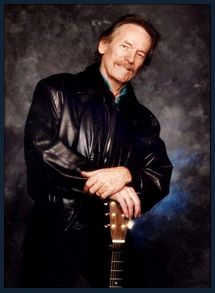
In November of 2006 I had the pleasure of meeting Gordon Lightfoot for my second time, much shorter now as I looked up at my idol from wheelchair level. I took that opportunity to ask him if about his song 'On The High Seas' and whether he too spent a sleepless night in Hornepayne while the trains shuffled in the moonlight. I hoped to "get a scoop" on that story and pass it onto the Lightfoot News Group. Gord listened to my story intently. Having laid out the scenario, I reclined back waiting for some spectacular insight. Gordon answered me "I really don't know". With a chuckle he had revealed to me that the marriage between music and lyrics isn't always the product of deep thought or some profoundly moving emotional experience but sometimes may just due to momentary inspiration or sheer chance. If the words fit, use them!

* * *
Massey Hall November 2006: Gordon Lightfoot and Myself Chatting about Hornepayne Ontario.

* * *
© Copyright - All rights reserved.

Sunday, 28 September 2008

Kettle Falls - Missinaibi River (1980)

Kettle Falls - Missinaibi River
(A Fleeting Glimpse of Spirituality)
(Chapter Three)

“I went to the woods because I wished to live deliberately, to front only the essential facts of life and see if I could not learn what it had to teach and not, when I came to die, discover that I have not lived”
Henry David Thoreau
The sun danced between tree boughs as it continued it’s descent in the afternoon sky. Brian and I increased our rhythm, each stroke reaching out for our evening’s destination of ‘Kettle Falls’. Our rapid cadence soon rewarded us with the sound of churning water from distant whitecaps as they danced in the waning sunlight. A portage marker on the left bank directed us to shore where aluminium on granite announced our arrival. Lashing the bow to a driftwood stump, we ambled over the rocks for our first view the falls. As waterfalls go, this was not a grand or spectacular sight for the drop was no more than seven feet in the Missinaibi’s never ending journey to join the waters of James Bay. Yet the sound of churning water, like raindrops on a canvas roof or the mournful cry of a loon on a foggy morning, has always stirred emotions deep within me. In spite of it’s diminutive size, this waterfall demanded respect as made evident by the occasional log which drifted into it’s grasp. Caught by it’s watery fist it would gather speed as it was swept over the rocky ledge then disappear in the churning foam below. Held captive, it would swirl and dance below the whirlpool’s surface, then to be mockingly flung out in the foam below.

Kettle Falls was named for it’s unusual geological feature. Over millennia, the unceasing scrubbing action of river current ladened with suspended sand had scoured holes or “kettles” into the granite substrata. The story has it that native americans had cleverly utilized these features for cooking. Rocks heated in a roaring fire were rolled into the water filled depressions bringing it’s contents to a boil. Fish, game or roots would be added in the preparation of a steaming riverside repast. Garnished with the wild chives which grew abundantly in rock crevices, a wilderness ‘Haute cuisine’ would reward the weary river traveler. Ingenuity in the utilization of what nature provided.

Regretfully, our nourishing yet somewhat less enticing meal had escaped from a freeze dried packet and was garnished with a steadily increasing number of mosquitoes. Not to be outdone by the natives we too put these water filled kettles to use as our kitchen sinks. With the pots, and utensils scrubbed clean of ‘chicken a la king’, Brian decided to call it a day and retired to the tent.


The dying fire’s embers still crackled as ribbons of acrid smoke twisted their way heaven bound. The sun had taken it’s final curtain call, having descended below the height of trees on our western shore. Although I was enveloped in darkness, the angle of the sunlight, like spotlights on a stage, still illuminated the far shore. Turning my back to the forest, I walked towards the light. At the river bank, against all logic, I searched for a comfortable rock on which to rest my weary bones. Surveying the panorama before me, I marvelled at the landscape. Like teenagers with bare knees protruding through ragged tattered blue jeans, the granite backbone of the Canadian shield poked through the thin northern soil.

I allowed my senses to fill with the heady aroma of the fire, the sound of birds engaged in their “dusk chorus” and the shimmering orange-magenta hues mirrored in the blue Missinaibi waters and roaring whitecaps alike. Lulled by the hypnotic setting of my wilderness heaven, my mind began to drift. First, like a trickling stream, then like the torrential river before me, memories and emotions quickly streamed by flooding my mind. Not unlike the experience described by people facing life threatening situations, my life also appeared to flash before me. Memories of past events, treasured friends and loving family, reeled by as from an out-of-control movie projector. Unlike common memories, these recollections were so much more deep and intense. Details long forgotten were revealed as years of foggy distortions dissipated. An overwhelmingly intense feeling of love and understanding enveloped me. The power of these memories and emotions were like nothing I had ever experienced before....

Religion had never been a significant factor in my life. In the old country, my mother had been raised a Catholic, my father a Lutheran. As wartime refugees, they met in Canada and after a proper courtship, decided to marry. Religious institutions were not so open and accommodating in those days and in order to have a church wedding, they would have to unite under one denomination. As it was easier for my mother to convert to Lutheranism than my father to Catholicism, they chose the easier road. My parents, facing the demands of making a living in the early 1950s found themselves consumed by hard work and daily chores. Religion was always woven into the fabric of our lives but little time could be to the dedicated to it’s applied practice by way of Sunday service attendance. I was baptized and in later years confirmed in our Lutheran church but otherwise, attendance was minimal and usually reserved for special occasions such as religious holidays, weddings or funerals. Still, religion was undeniably present in our home and exerted an influence on my upbringing.

My life’s path took me to the University of Western Ontario where I chose to study science. I had always been fascinated in how the natural world was structured, organized and governed by logical laws and rules. I have at times been questioned as to whether I find a conflict between verifiable scientific fact and religion based purely on faith. I can only answer that within the wonders of science there are just too many absolutely fantastic and astounding features for this world to have arisen by pure chance.

Although a majority of the world’s population finds comfort and solace in participating in an organized religion, I have never been drawn to any church or denomination. Perhaps it is because all of the rituals any religion surrounds itself with are “man made” and symbolic interpretations of what man thinks would please their God. Contents of the New Testament were compiled by editors under the reign of Constantine and decisions were made as to what to include or exclude from the scriptures. Human bias and political pressure of the times no doubt had an influence in what was written and what we are taught today. Biblical accounts were based on observations by people much more impressionable and superstitious than ourselves. Even today, two people witnessing the same event will passionately describe their observations differently. Many of the biblical statements would be disallowed in today’s court room as hear-say. Where do we look for what is undeniable truth? If not fact, then we must rely on faith.

I do find it troubling that so very many atrocities have been committed and wars fought in the name of God. In my mind it incomprehensible that a loving God would have asked Abraham to sacrifice his son Isaac to prove his faith. I fail to understand how religious followers feel it pleases God to sacrifice some animal in his name. Why destroy God’s own work for something symbolic? Are we to live in fear of God or is God a gentle loving and forgiving deity? If so, will the most heinous and atrocious deeds be forgiven if one finds God on their deathbed? Would a kind and righteous atheist be allowed into heaven, if there turns out to be one? Religion is a conundrum and even those most schooled in the subject can only offer the combined speculation assembled over the ages. That is what we call unwavering faith.

Religion has always been a very personal matter to me. I believe that I will be judged, not on how often I attend church but rather on my values and how I chose to live my life on a daily basis. Is it better to spend time in church praising God or to eulogize him by actions such as helping people less fortunate than oneself? Does God keep a scorecard? I was married before God in a beautiful church. I have visited various churches as a tourist and found them calming to the soul and inspiring. Yet, I do not believe that God lives between four walls. I see the ten commandments simply as logical rules to live one’s life by. They make sense for an honourable and civilized society regardless of their origin. I sense an unseen energy running through my life which I might choose to call a deity, a spirit or force.. I still call this feeling the presence of God and my faith remains intact even in the presence of my science.

I slowly became aroused finding myself warmed by both the campfire and my emotions. Like the flickering end of a cellulose in a film reel, the images rolled to a halt. Sitting on the darkened shores of my pine and granite cathedral, I felt a sense of peace and tranquility never previously experienced . Although the intensity of the moment had dispersed, the afterglow of the experience remains with me to this day. Had I been touched by God for these few fleeting moments at Kettle Falls? Call it what you will.

Dousing the campfire I scanned my river one last time on this precious evening and zipped myself into the tent to prepare for tomorrow’s continuing journey. Down my beautiful Missinaibi River and the ever meandering river of my life…

* * *
© Copyright - All rights reserved.

( I did not relate my emotional Kettle Falls experience to Brian the following morning, nor did I speak of it for years afterwards. In more recent years, when asked of my religion, I only half jokingly replied that my denomination is “New Wilderness Reformed” . Some have been confused, others nodded in understanding. while a few have looked at me as if I had committed blasphemy. To this day, I feel closest to my creator when surrounded by the infinite marvels of my northern wilderness, isolated from the crazy hectic nonsense that drives the superficial daily world.)

Tu es mon compagnon de voyage!
Je veux mourir dans mon canot
Sur le tombeau, près du rivage,
Vous renverserez mon canot

When I must leave the great river
O bury me close to its wave
And let my canoe and my paddle
Be the only mark over my grave

From 'Mon Canoe d'écorce' ('My Bark Canoe') translated by Frank Oliver Call

Note: To view a slide show of the Missinaibi River Canoe Trip, including Kettle Falls, return to Chapter Two and scroll to the bottom of the tale. Click on Frame to initiate show.

Google Earth Co-ordinates:
(cut and paste everything after the dash- (in red) into Google Earth search bar.

Kettle Falls
Lat/Long- 49° 47’11.44” N, 83° 13’13.62” W


"In wilderness I sense the miracle of life, and behind it our scientific accomplishments fade to trivia."
~Charles A. Lindbergh, Life, 22 December 1967

Tuesday, 26 August 2008

Moose River 1980 (1st Missinaibi RiverTrip)

Missinaibi River - First Excursion
Moose River 1980
(Chapter Four - Conclusion)

"Canoeists and other primitive-trippers are not delighted to encounter others intent on the same private experience. How many visitors constitute the end of wilderness?"
John A. Livingston


Squinting, the vista before me could have been from some exotic tropical travel brochure. Shimmering white sands, clear blue waters and lush green forests were enticing us to stay yet another day. Dousing our campfire with the remaining coffee, we broke camp and packed our canoe. The morning sun began to play tag with the clouds as we pushed off and leisurely began to paddle northward on the mighty Moose River.

Perhaps it started long ago, in the mind of a child, with some mental image that slowly developed over time. Images of a deep and dark mysterious river meandering through some boreal forest or equally desolate landscape, tree boughs draped over the river bank sheltering it from intruders. A foreboding steel blue sky threatening from above, keeping secrets from all but the most adventurous. A mysterious place, A private place. This became my mental image Canada’s mighty Moose River.

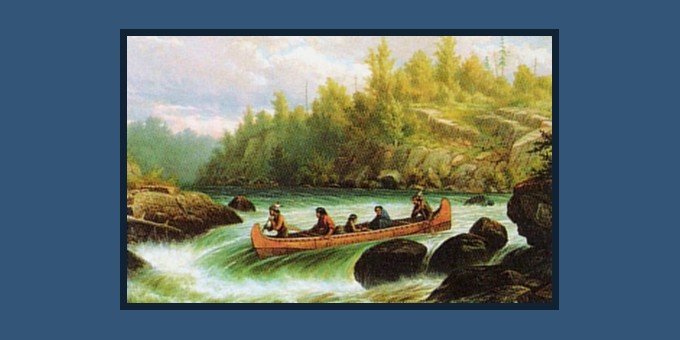
Fascinating tales of the Coureur de Bois, hardy fur traders carrying their own weight in supplies to remote outposts, provided further material for day dreams during Canadian history class in elementary school. As if by magic, the past suddenly became linked to my present with Ontario Northland Railway's Polar Bear Express. Here were photographs of a train packed with school children, not unlike myself, on an excursion back in time, faces pressed to the windows with wide eyed stares reflected in the waters of the mighty Moose River. I vowed that someday I too would relive these childhood dreams and board the Polar Bear Express northward for a trip to Moosonee

To my surprise, the Moose River was not deep and meandering, but quite shallow, carving a relatively straight path to the brackish water of James Bay. Trees on the banks had their boughs trimmed yearly by the flow of ice during the spring break-up and did not embrace the river as I had imagined. The width of the river allowed the warmth of the sun to penetrate giving a perfect view of the majestic northern sky which welcomed all visitors. The 'Moose' turned out to be nothing like the images conjured up in my childhood fantasies, except in the fact that it was no less grand and majestic

We continued to paddle northward where the first sight of civilization in about ten days was the Ontario Northland's railway bridge spanning the river at Moose River Crossing. As we negotiated the rapid water around the base of the bridge, the sound of an approaching train thundered into our consciousness. There, to my amazement, appeared the Polar Bear Express. crossing the bridge at precisely the right time for we could see school children with their faces pressed against the windows greeting us with enthusiastic waves and discharging flash bulbs. We raised our paddles into the air in a salute!

The circle was complete. I was on my way to Moosonee via the Moose River under my own power! So much better than by the train trip I had once envisioned. I wondered what stories and images those school children may now have and how it may influence them in future years

Daydreams turned to reality as threatening skies suggested we find shelter quickly. Approaching the confluence of the Moose and the Abitibi Rivers, we made for the eastern shore and hastily heaved our packs up the steep bank. Were we in luck? A beautifully cleared point of land led to a cabin hiding within the forest. Shaking the latch we were disappointed to find that the roughly hewn wooden door was locked, separating our shelter from the approaching elements. Retreating to our packs, we set up our tent only minutes before the rain began to pour. The deluge soon invited the wind to join in as daylight turned dark as night. Never before have I seen lightning splitting the sky sideways as it traversed the horizon! While trying to secure the tent from the buffeting wind fighting to tear it from its earthen moorings, the dancing trees separated long enough for us to spy an additional structure hidden by the forest. Defeated, we threw rocks on the collapsed tent in hopes preventing it from reaching Moosonee before us, then made a mad dash for the cabin with what packs we could carry. Salvation! The cabin was open! Stumbling into our sanctuary, the torrential rain poured down in biblical proportions as the thunder bellowed angrily. The darkness within soon gave way to the warm glow of a lantern revealing bunk beds, a crude table and wood stove. Heaven! Rehydrating supper and sipping steaming mugs of fortified coffee, we settled into our bunks and watched the curtains of rain drape our window.

The morning sky remained gun-metal blue as the clouds defeated the sun’s meagre attempt to poke through.. Venturing out to assess the damage we gathered up our scattered gear and prepared to brave the final leg of our journey. Raising my collar to the wind, we pushed off into the bleakness. Rhythmic paddle strokes beat out the seconds, minutes and hours of river travel.

Brackish tasting water and increasingly evident tidal action betrayed the fact that our destination of Moosonee was obtainable within the day. Emboldened by that knowledge and the anticipation of cold beer, we doubled our stroke and regrettably threw caution to the wind. Light danced off of the distant river revealing the presence of a final set of rapids, the Kwatogohegans(2). Reconnoitering the water before us, we could see no rocks or other obstructions - only large standing “haystack" waves. The last hurrah would be an exhilarating roller coaster ride down this chute of water. We approached along the west bank and passed the point of no return. Smash! - the first wave broke over the bow of the Starcraft canoe drenching me head to toe.. Smash!! - came the second wave repeating the first. My knees were now bathed in water. Smash!!! - came another as water settled around my thighs. Smash, smash, smash - my stomach sank as did our canoe. We probably were quite the sight, riding out the tail end of the rapids with our canoe below the river surface with only the wildlife witness to our predicament. Throwing a line to shore we swam to retrieve it and haul our canoe to the river bank. Unpacking, we drained our gear and found that river sand had infiltrated every crevice of our packs and clothing. Draining the canoe, we sheepishly repacked and silently disembarked with a lesson learned.


Kwatobohegan Rapids - Courtesy Irwinsg
(ie. not from my personal trip)
(My memory has this section as even more violent than pictured in this video)

Late afternoon heightened the biter-sweet realization that Moosonee was in sight. Our final strokes did not seem to propel us at all. Finally reaching the public waterfront landing we shook hands in congratulation, tied our canoe to a post and sprinted up the river bank. Reaching Revillon Street which ran parallel to the river, we chose to turn up First Street where convenience stores and restaurants beckoned us to taste civilization once again.


“May we take your picture?” We didn’t understand. “May we take your picture?” Still wet and sandy from the Kwatobohegan Rapid’s failed attempt to scrub ten days of river travel from our tired frames, we were a sad looking pair. While dazed by the sights and noise of Moosonee, we were approached by two elderly ladies with cameras strung around their necks. “Excuse me, may we take your picture?” They explained to us that they had just arrived from Toronto on the Polar Bear Express to see the northern town of Moosonee. Begging for our photo as proof to friends that they had indeed met Moosonee natives, we didn’t have the heart to refuse. Nor did we reveal to them that as residents of the greater Toronto area, we too were visitors and perhaps in a weeks time, neighbours. Our good deed of the day completed, we entered a restaurant for the best tasting hamburger and cola imaginable. No rehydration or river water required.

Our waitress had noticed our predicament as we waddled in, shaking one leg, followed by the other, chafing from our wet clothing and depositing sand in our footsteps. She kindly informed us that the town laundromat was a few streets south. Thanking her, we headed back to the waterfront to retrieve our canoe and packs before evening set in. Our canoe had been moved! We quickly realized that the tide had come in and with our canoe firmly tied to a post, it was in the process of disappearing underwater for the second time that day as the river water rose. The kindness of an unknown resident saved our gear as well as pride by retying the canoe further up the bank. Such were our first impressions of this rugged frontier town.

Finding a willing resident to house our canoe for the duration of our stay, we picked up a six pack of beer from the town’s liquor store and headed off to find the laundromat. Walking with distress, a van roared past us in a cloud of dust and illuminated brake lights.
We rubbed our eyes in disbelief as the rusty Ford reversed and two long haired angelic native Cree girls poked their heads out the windows, “Want a ride?” Moosonee must be close to heaven, I thought! Regrettably the ride, as our conversation, was far too short as we stepped out at the laundromat and said our woeful goodbyes.

An interesting enterprise, this blue concrete block structure. It housed a small variety store on one side and the town laundromat on the other, separated by a partial cinder block wall. We alternated feeding the washing machine coins while feeding ourselves junk food from the adjoining store. We then stepped outside to quaff down beer and re-entered the laundromat only to repeat the cycle.

Suddenly a commotion from within the laundromat drew our attention.. To our horror the washing machines were shuddering with a sickening grinding noise as they attempted to dance around the room. Investigating the noise, the proprietor peeked around the corner only to see us smiling, backs propped up against the machines, steadying them. As all appeared in order he returned to his store counter. Brian and I opened the machines to discover a layer of Kwatobohegan sand on the bottoms of the drums. Horrified, we scooped up all the silt we could, discarding it in the garbage. Reloading our clothes in other machines we proceeded to finish our laundry. Brian and I cleaned out the damaged machines as best we could while nervously keeping an eye on the store keeper’s entrance. Before we could breath a sigh of relief, the new machines began to convulse in sympathy to their damaged neighbours. Again the store keeper cast us a questioning glance around the wall as we held our rocking washers and nodded with feigned innocence..

With knots in our stomachs we once again cleaned out the machines and made a hasty getaway, backpacks dripping with semi dried clothes. Flagging a river taxi we completed our escape by retreating to our Charles Island campsite, putting half the width of the mighty Moose River between us and the towns folk who no doubt would be making plans to lynch us..

It was with regret that we could not afford to owe up to the damages to the laundromat. We were even sorrier for the numerous Moosonee natives that must have had to live with the stench of filthy clothing, waiting for the washing machines to be repaired.
A final night was spent at the Moosonee Lodge where hot showers and soft beds awaited. Loading our canoe into a box car the following morning, we boarded the Northlander (1) and I experienced the train trip envisioned in my youth.

© Copyright - All rights reserved.


* * *


(1) The Northlander is the Ontario Northland Railway’s (ONR) mixed freight and passenger train whereas the Polar Bear Express is strictly a passenger excursion train. Both run between the towns of Moosonee and Cochrane Ontario on alternate days.

(2) Kwatobohegan Rapids - have also seen the placename spelled Kwatogohegan. Although I have used the spellings interchangeably here, I first encountered the name spelled with a b as Kwatobohegan and find that pronunciation most pleasing to my ear. Other variations no doubt exist.

Note: To view a slide show of the Missinaibi River Canoe Trip, Return to Chapter Two and scroll to the bottom. Click on frame to initiate show.

Google Earth Co-ordinates:
(cut and paste everything after the dash- (in red) into Google Earth search bar.

Portage Island (Missinaibi & Mattagami Junction forming Moose River)
Lat/Long 50° 44’06.53” N, 81° 28’41.14” W

Moose River & Abitibi River Junction
Lat/Long- 51° 03’09.28” N, 80° 55’53.89” W

Moose River Crossing
Lat/Long- 50° 49’03.92” N, 81° 17’32.57” W

Moosonee ON
Lat/Long- 51° 51’16.28” N, 80° 38’43.81” W